
• Technology
  • Business
  • Finance
  • Education
  • Entertainment
  • Blog
  • Real Estate
businessmotorring.co.uk
keep your memories alive
Mii TempRE: Transforming NHS Workforce Management Through Smart Integration
Blog

Mii TempRE: Transforming NHS Workforce Management Through Smart Integration

by d.son.madden@gmail.com February 2, 2026
written by d.son.madden@gmail.com

In the UK, the NHS employs over 1.4 million people, making it one of the largest employers in the world. Yet despite its scale, workforce coordination remains one of its biggest operational challenges. Staffing shortages, rota gaps, compliance pressures, and clinician burnout continue to strain the system. According to multiple workforce studies, inefficient staff deployment directly impacts patient safety, clinician wellbeing, and financial sustainability.

This is where mii tempre enters the picture.

Mii TempRE, integrated seamlessly with the Liaison Link app, represents a modern evolution in NHS workforce management. Built to support healthcare professionals in managing their daily NHS life, TempRE connects clinicians directly with Liaison Workforce’s suite of solutions—bringing visibility, control, and efficiency into one unified ecosystem.

This article delivers a deep, strategic exploration of mii tempre, how it works, why it matters, and how it fits into modern healthcare workforce management. It is written for decision-makers, NHS managers, clinicians, and digital health leaders seeking clarity—not hype.


Sommaire

  • Introduction: Why Workforce Technology Matters More Than Ever
  • What Is Mii TempRE?
    • Understanding the TempRE Ecosystem
    • The Role of Liaison Link
  • How Mii TempRE Works in the NHS
    • Integration with Liaison Workforce Solutions
    • Daily Use for Healthcare Professionals
  • Why Mii TempRE Is Different
  • Comparing Modern Management Strategies
    • Agile vs. Traditional Workforce Models
    • Top-Down vs. Bottom-Up Staffing Approaches
  • Key Benefits of Mii TempRE
  • Limitations and Challenges
  • Pros & Cons of Mii TempRE
  • Comparative Table: Workforce Management Approaches
  • Real-World Use Cases
    • Acute Trust Staffing
    • Community Healthcare Teams
    • Temporary Workforce Pools
  • What to Avoid
  • Expert Insights & Pro-Tips
  • Frequently Asked Questions (FAQ)
  • The Future of NHS Workforce Management
  • Conclusion
  • References & Authority Sources
  • SEO Deliverables

What Is Mii TempRE?

At its core, mii tempre is a workforce management solution designed specifically for the complexities of the NHS. Rather than functioning as a standalone platform, TempRE is integrated directly into the Liaison Link app, which healthcare professionals already use to manage their work life.

This integration is critical. It means TempRE does not add friction—it removes it.

Understanding the TempRE Ecosystem

TempRE is part of the broader Liaison Workforce ecosystem, which supports NHS organisations with:

  • Temporary staffing coordination
  • Workforce compliance and governance
  • Shift visibility and allocation
  • Data-driven workforce planning

Mii tempre acts as the operational layer that brings these capabilities directly to clinicians and managers in real time.

Pro-Tip: Workforce tools fail when they add steps. TempRE succeeds because it embeds workforce intelligence into existing clinician workflows.


The Role of Liaison Link

The Liaison Link app is designed for healthcare professionals to manage their daily NHS life—from shifts and availability to communication and workforce updates.

By integrating mii tempre into Liaison Link:

  • Clinicians access workforce tools without switching platforms
  • Managers gain real-time staffing visibility
  • Liaison Workforce solutions become actionable, not abstract

This tight integration is one of TempRE’s strongest differentiators.


How Mii TempRE Works in the NHS

Understanding how mii tempre functions in practice requires looking at both sides of the workforce equation: clinicians and organisations.

Integration with Liaison Workforce Solutions

TempRE connects seamlessly with Liaison Workforce’s existing infrastructure, allowing NHS organisations to:

  • Centralise temporary staffing processes
  • Ensure compliance with NHS workforce regulations
  • Reduce agency dependency
  • Improve fill rates and rota stability

Rather than replacing systems, mii tempre enhances and unifies them.

Daily Use for Healthcare Professionals

For clinicians, TempRE feels simple—but powerful:

  • View available shifts
  • Manage availability
  • Accept or decline work in real time
  • Stay compliant without administrative overload

All of this happens inside Liaison Link, eliminating fragmented experiences.

Pro-Tip: Adoption improves dramatically when clinicians see personal value first—TempRE prioritises usability over bureaucracy.


Why Mii TempRE Is Different

Many workforce systems promise efficiency. Few deliver it at the clinician level.

Mii tempre stands out because it is:

  • Human-centric – designed around clinician behaviour
  • Integrated – not another disconnected platform
  • NHS-specific – built for real NHS constraints
  • Data-informed – supports smarter workforce decisions

Instead of forcing NHS teams to adapt to software, TempRE adapts to NHS reality.


Comparing Modern Management Strategies

Agile vs. Traditional Workforce Models

Traditional NHS Workforce Management

  • Fixed rotas
  • Reactive staffing
  • Limited flexibility
  • Heavy administrative burden

Agile Workforce Management with Mii TempRE

  • Dynamic shift allocation
  • Real-time availability
  • Faster response to demand
  • Reduced admin load

Agile models, supported by mii tempre, enable NHS organisations to respond to patient demand without burning out staff.

Pro-Tip: Agile doesn’t mean chaotic—it means informed flexibility backed by reliable data.


Top-Down vs. Bottom-Up Staffing Approaches

Top-Down Approach

  • Decisions made centrally
  • Limited clinician input
  • Slower response times

Bottom-Up Approach Enabled by TempRE

  • Clinicians manage availability
  • Managers see live workforce data
  • Faster, more accurate staffing decisions

Mii tempre bridges these models by empowering clinicians while maintaining organisational oversight.


Key Benefits of Mii TempRE

  • Improved workforce visibility
  • Reduced rota gaps
  • Better clinician engagement
  • Lower agency spend
  • Stronger compliance controls
  • Enhanced operational resilience

Each benefit compounds over time, creating measurable system-wide impact.


Limitations and Challenges

No system is without constraints.

Potential challenges with mii tempre include:

  • Initial change management requirements
  • Training needs for non-digital users
  • Dependence on data accuracy

However, these challenges are operational—not structural—and can be mitigated with strong implementation support.


Pros & Cons of Mii TempRE

Pros

  • Designed for NHS workflows
  • Integrated into Liaison Link
  • Improves clinician experience
  • Supports agile workforce strategies

Cons

  • Requires digital adoption readiness
  • Change resistance in traditional teams
  • Benefits increase over time, not overnight

Comparative Table: Workforce Management Approaches

FeatureTraditional NHS StaffingAgency-Heavy ModelMii TempRE Model
FlexibilityLowMediumHigh
Cost ControlMediumLowHigh
Clinician AutonomyLowMediumHigh
ComplianceManualVariableAutomated
Real-Time VisibilityNoLimitedYes
SustainabilityLowLowHigh

Real-World Use Cases

1. Acute NHS Trust Staffing

TempRE enables rapid shift filling during demand spikes, reducing escalation to expensive agency staff.

2. Community Healthcare Teams

Clinicians manage flexible availability while managers maintain coverage across large geographic areas.

3. Temporary Workforce Pools

Mii tempre supports transparent, fair access to shifts—boosting engagement and retention.

Pro-Tip: Transparency in shift allocation directly correlates with clinician satisfaction.


What to Avoid

Common Workforce Management Mistakes

  • Treating TempRE as “just another system”
  • Ignoring clinician onboarding
  • Failing to align workforce policy with digital tools
  • Measuring success too early

Mii tempre delivers results when paired with thoughtful change management.


Expert Insights & Pro-Tips

Pro-Tip: Workforce data is only valuable when it drives decisions—use TempRE insights actively, not passively.

Pro-Tip: Involve clinical champions early to accelerate adoption.

Pro-Tip: Measure outcomes in clinician wellbeing, not just cost savings.


Frequently Asked Questions (FAQ)

1. What is mii tempre?

Mii TempRE is a workforce management solution integrated into the Liaison Link app for NHS professionals.

2. Who is TempRE designed for?

NHS trusts, workforce managers, and healthcare professionals.

3. How does TempRE integrate with Liaison Link?

It operates directly within the app, providing seamless access to Liaison Workforce solutions.

4. Is mii tempre NHS-compliant?

Yes, it is designed specifically for NHS workforce governance.

5. Does TempRE reduce agency spend?

Yes, by improving internal workforce utilisation.

6. Can clinicians control their availability?

Yes, clinician autonomy is a core feature.

7. Is training required?

Minimal training is needed due to intuitive design.

8. Does TempRE support real-time staffing decisions?

Yes, real-time visibility is a key benefit.

9. Is TempRE suitable for all NHS settings?

Yes, including acute, community, and specialist services.

10. How does TempRE improve clinician wellbeing?

By reducing admin burden and increasing scheduling transparency.

11. Can TempRE scale across large trusts?

Yes, it is built for enterprise-level NHS environments.

12. What makes mii tempre different?

Its integration, NHS focus, and human-centric design.

February 2, 2026 0 comments
0 FacebookTwitterPinterestEmail
Fanisco: Future-Proofing Your Brand with a Global Mindset
Blog

Fanisco: Future-Proofing Your Brand with a Global Mindset

by d.son.madden@gmail.com February 2, 2026
written by d.son.madden@gmail.com

According to McKinsey, companies that adopt a globally integrated strategy are 23% more likely to outperform competitors in profitability and long-term resilience. In a world shaped by borderless digital economies, distributed teams, and culturally diverse consumers, brands that cling to local-only thinking are quietly falling behind.

This is where Fanisco enters the conversation.

Fanisco is not just a concept—it represents a future-ready brand philosophy built on global mindset, adaptive management, and human-centric strategy. It reflects how modern organizations can scale sustainably, stay culturally relevant, and compete intelligently across markets without losing identity or trust.

This guide explores Fanisco as a strategic framework, showing how leaders, marketers, and executives can future-proof their brands by thinking globally while acting with local precision.


Sommaire

  • What Is Fanisco?
  • The Core Principles Behind Fanisco
    • Global Mindset Explained
    • Cultural Intelligence as a Competitive Advantage
    • Decentralized Decision-Making
  • Why Fanisco Matters in Today’s Business Landscape
  • Fanisco and Brand Resilience
  • Comparing Modern Management Strategies
    • Agile vs. Traditional
    • Top-Down vs. Bottom-Up
  • Strategic Benefits of Fanisco
  • Limitations and Challenges
  • Comparative Table: Fanisco vs. Traditional Brand Models
  • What to Avoid
  • Real-World Use Cases
  • Frequently Asked Questions
  • References & Authority Sources
  • Final SEO Deliverables

What Is Fanisco?

Fanisco represents a brand and management philosophy centered on global awareness, adaptability, and long-term relevance. At its core, Fanisco blends strategic foresight with cultural fluency—enabling organizations to operate confidently across borders, markets, and mindsets.

Rather than treating globalization as a scaling tactic, Fanisco treats it as a strategic capability.

Key characteristics of Fanisco include:

  • A global-first mindset in leadership and strategy
  • Strong emphasis on cultural intelligence (CQ)
  • Adaptive, future-proof brand architecture
  • Balance between global consistency and local autonomy

Fanisco is especially relevant for brands navigating:

  • International expansion
  • Multicultural audiences
  • Remote and distributed teams
  • Rapid market shifts and uncertainty

Pro-Tip: Brands that succeed globally don’t just translate messaging—they translate meaning.


The Core Principles Behind Fanisco

Global Mindset Explained

A global mindset is the ability to understand, integrate, and act upon diverse cultural, economic, and strategic perspectives. Within Fanisco, this mindset shapes every level of the organization—from leadership decisions to brand storytelling.

Unlike traditional international strategies, Fanisco avoids rigid centralization. Instead, it promotes:

  • Strategic alignment across regions
  • Local empowerment within a global vision
  • Continuous learning across markets

Cultural Intelligence as a Competitive Advantage

Cultural intelligence is not a “soft skill” in the Fanisco framework—it’s a hard competitive asset.

Brands operating with low cultural awareness often face:

  • Brand misalignment
  • Reputation risks
  • Failed market entry

Fanisco-driven organizations embed cultural research, local insight teams, and inclusive leadership into their operations.

Pro-Tip: High-performing global brands invest in cultural training as deliberately as they invest in technology.

Decentralized Decision-Making

Fanisco encourages decision-making closer to the market. While strategy remains globally aligned, execution adapts locally.

This approach leads to:

  • Faster market responsiveness
  • Higher employee engagement
  • More authentic customer connections

Why Fanisco Matters in Today’s Business Landscape

The modern business environment is defined by volatility, uncertainty, complexity, and ambiguity (VUCA). Fanisco directly addresses these realities.

Market Volatility

Global crises—economic, political, environmental—impact brands across regions differently. Fanisco enables scenario-based planning and flexible response strategies.

Talent Globalization

With remote work becoming standard, brands now manage cross-border teams by default. Fanisco provides a cultural and strategic operating system for this new reality.

Consumer Expectations

Modern consumers expect brands to be:

  • Culturally aware
  • Socially responsible
  • Consistent yet locally relevant

Fanisco aligns brand values with global ethics while respecting local nuance.


Fanisco and Brand Resilience

Brand resilience is no longer about surviving downturns—it’s about adapting continuously without losing identity.

Fanisco strengthens resilience by:

  • Diversifying market dependencies
  • Encouraging innovation across regions
  • Building trust through cultural authenticity

Resilient brands don’t react—they anticipate.

Pro-Tip: Resilience increases when insights flow horizontally across regions, not just vertically through leadership.


Comparing Modern Management Strategies

Agile vs. Traditional

Agile management aligns naturally with Fanisco principles.

AspectAgileTraditional
StructureFlexibleHierarchical
SpeedRapid adaptationSlow response
InnovationContinuousPeriodic

Fanisco favors agile systems because they support cross-market experimentation and fast learning loops.

Top-Down vs. Bottom-Up

Fanisco challenges strict top-down models.

  • Top-Down: Ensures consistency but limits local relevance
  • Bottom-Up: Encourages innovation but risks fragmentation

Fanisco blends both—strategic clarity from the top, execution intelligence from the ground.


Strategic Benefits of Fanisco

Adopting Fanisco delivers tangible advantages:

  • Scalable brand coherence across markets
  • Higher employee alignment and motivation
  • Reduced risk during international expansion
  • Stronger customer trust and loyalty

Brands operating with Fanisco are better equipped to evolve alongside global trends rather than chase them.


Limitations and Challenges

Fanisco is powerful—but not effortless.

Challenges include:

  • Increased complexity in governance
  • Need for advanced leadership capabilities
  • Higher upfront investment in training and systems

Without disciplined alignment, decentralization can lead to inconsistency.

Pro-Tip: Fanisco fails when global vision is unclear—clarity precedes autonomy.


Comparative Table: Fanisco vs. Traditional Brand Models

FeatureFanisco ModelTraditional Model
MindsetGlobal-firstMarket-specific
Decision PowerDistributedCentralized
Cultural FocusHighLow
AdaptabilityStrongLimited
Long-Term ResilienceHighModerate

What to Avoid

What to Avoid

Common mistakes brands make when attempting Fanisco-like strategies:

  • Confusing globalization with standardization
  • Ignoring cultural differences in leadership styles
  • Over-decentralizing without governance
  • Treating global mindset as a branding exercise rather than an operational shift

Avoid surface-level adoption—Fanisco requires structural commitment.


Real-World Use Cases

Use Case 1: Global Consumer Brand Expansion

A lifestyle brand entering Southeast Asia adopted Fanisco by empowering local teams to adapt messaging while maintaining core brand values—resulting in a 34% faster market penetration.

Use Case 2: Distributed Tech Company

A SaaS firm used Fanisco principles to restructure leadership across regions, reducing internal friction and increasing cross-market innovation output.

Use Case 3: Professional Services Firm

By applying Fanisco, a consulting firm aligned global methodologies with local regulatory expertise, improving client trust and retention.


Frequently Asked Questions

What does Fanisco mean in business strategy?

Fanisco refers to a global-first, future-oriented brand and management philosophy.

Is Fanisco a framework or mindset?

It functions as both—a strategic framework grounded in a global mindset.

Who should adopt Fanisco?

Brands expanding internationally or managing multicultural teams benefit most.

How does Fanisco support future-proofing?

It enhances adaptability, resilience, and cultural relevance.

Is Fanisco industry-specific?

No. It applies across industries, from tech to consumer goods.

Does Fanisco replace traditional management?

It evolves traditional models rather than replacing them entirely.

How long does Fanisco implementation take?

Typically 12–24 months for structural integration.

Is Fanisco suitable for startups?

Yes, especially startups with global ambitions.

What skills are critical for Fanisco leadership?

Cultural intelligence, strategic foresight, and adaptive thinking.

How does Fanisco impact branding?

It ensures consistency without sacrificing local authenticity.

February 2, 2026 0 comments
0 FacebookTwitterPinterestEmail
Hill Seven: A Strategic Framework for Modern Leadership, Growth, and Competitive Advantage
Business

Hill Seven: A Strategic Framework for Modern Leadership, Growth, and Competitive Advantage

by d.son.madden@gmail.com February 2, 2026
written by d.son.madden@gmail.com

In a 2024 global leadership survey, over 67% of executives reported that their biggest challenge was not market competition—but strategic alignment across teams. As organizations grow more complex, leaders are searching for frameworks that go beyond theory and actually work in dynamic, high-pressure environments.

This is where Hill Seven has gained attention.

Rather than being a rigid model or buzzword-heavy methodology, Hill Seven is increasingly used as a strategic lens for leadership, organizational design, and sustainable performance. It combines systems thinking, modern management principles, and human-centric execution into a single, practical framework.

This article offers a deep, expert-level breakdown of Hill Seven, how it works, why it matters, and how leaders apply it in the real world—without hype, fluff, or abstraction.


Sommaire

  • Introduction: Why Hill Seven Matters Now
  • Understanding Hill Seven
    • What Is Hill Seven?
    • The Origin and Philosophy Behind Hill Seven
    • The Seven Strategic “Hills” Explained
  • Hill Seven as a Leadership and Management Framework
  • Comparing Modern Management Strategies
    • Agile vs. Traditional Models
    • Top-Down vs. Bottom-Up Leadership
  • Strategic Advantages of Hill Seven
  • Pros & Cons of the Hill Seven Approach
  • Comparative Table: Hill Seven vs. Other Management Models
  • Real-World Use Cases
  • What to Avoid When Implementing Hill Seven
  • Frequently Asked Questions (FAQ)
  • References & Authority Sources
  • SEO Deliverables

Understanding Hill Seven

What Is Hill Seven?

Hill Seven is a multi-dimensional strategic framework designed to help organizations align leadership, operations, culture, and execution. The term “Hill” represents elevated vantage points—areas where leaders must gain clarity to make informed decisions—while “Seven” refers to the seven core domains that collectively determine organizational success.

Unlike traditional linear models, Hill Seven emphasizes balance, sequencing, and visibility. You don’t conquer all hills at once; you prioritize based on terrain, timing, and capacity.

Pro-Tip: Hill Seven works best when treated as a navigation system, not a checklist.


The Origin and Philosophy Behind Hill Seven

Hill Seven emerged from the convergence of:

  • Systems thinking
  • Lean management principles
  • Agile execution models
  • Behavioral economics
  • Organizational psychology

Its philosophy rests on three truths:

  1. Strategy fails without execution
  2. Execution fails without alignment
  3. Alignment fails without trust and clarity

Rather than optimizing isolated departments, Hill Seven forces leaders to see the organization as a living system—where progress in one hill affects stability in others.


The Seven Strategic “Hills” Explained

While interpretations vary slightly across industries, most implementations of Hill Seven include the following domains:

1. Vision & Direction

Defines why the organization exists and where it is going.

  • Long-term purpose
  • Strategic narrative
  • Market positioning

Without this hill, execution becomes reactive.

2. Leadership & Decision-Making

Focuses on how authority is exercised.

  • Leadership maturity
  • Decision velocity
  • Accountability structures

This hill determines whether strategy moves or stalls.

3. Culture & Behavior

Addresses how people show up every day.

  • Psychological safety
  • Ownership mindset
  • Feedback loops

Culture is not soft—it is operational.

Pro-Tip: Culture problems rarely originate in culture. They usually start in leadership behavior.

4. Systems & Processes

The operational backbone.

  • Workflow design
  • Tooling and automation
  • Governance mechanisms

Efficient systems reduce friction and cognitive load.

5. Talent & Capability

Ensures the right people are in the right roles.

  • Skill development
  • Role clarity
  • Succession planning

Capability gaps here silently undermine growth.

6. Execution & Delivery

Where strategy meets reality.

  • OKRs or KPIs
  • Sprint cadence
  • Performance tracking

Execution is the hill most organizations overestimate.

7. Learning & Adaptation

The feedback engine.

  • Retrospectives
  • Data-driven learning
  • Continuous improvement

This hill keeps the organization relevant over time.


Hill Seven as a Leadership and Management Framework

What makes Hill Seven distinct is its non-linear application. Leaders assess which hill requires focus now, rather than attempting blanket transformation.

For example:

  • A fast-scaling startup may prioritize Execution & Delivery and Talent
  • A legacy enterprise may need Culture and Systems reform first
  • A post-merger organization often starts with Vision and Leadership

Hill Seven thus functions as both a diagnostic tool and an execution roadmap.


Comparing Modern Management Strategies

Agile vs. Traditional Models

Agile and traditional management models differ fundamentally in structure, speed, and control.

Traditional management emphasizes predictability, hierarchy, and upfront planning. It performs well in stable environments but struggles with volatility.

Agile management, by contrast, prioritizes adaptability, experimentation, and rapid feedback—making it more suitable for modern, fast-changing markets.

Hill Seven integrates both:

  • Agile execution on the Execution hill
  • Traditional governance on the Systems hill
  • Strategic foresight on the Vision hill

This hybridization prevents the extremes of chaos or rigidity.

Pro-Tip: Hill Seven doesn’t replace Agile—it contextualizes it.


Top-Down vs. Bottom-Up Leadership

Top-down leadership offers speed and clarity but risks disengagement. Bottom-up leadership fosters ownership but can dilute strategic focus.

Hill Seven aligns both:

  • Strategic intent flows top-down through Vision
  • Execution insights flow bottom-up through Learning
  • Decisions meet in the Leadership hill

This creates a bi-directional leadership system, not a power struggle.


Strategic Advantages of Hill Seven

Organizations using Hill Seven consistently report:

  • Improved strategic clarity
  • Faster decision-making
  • Reduced execution waste
  • Higher employee engagement
  • Better cross-functional collaboration

Most importantly, it provides shared language—leaders and teams discuss problems using the same mental model.


Pros & Cons of the Hill Seven Approach

Advantages

  • Holistic and adaptable
  • Scales across industries
  • Encourages systems thinking
  • Reduces siloed optimization
  • Supports both strategy and execution

Limitations

  • Requires leadership maturity
  • Misuse as a checklist reduces impact
  • Cultural resistance can slow adoption
  • Benefits compound over time, not instantly

Hill Seven rewards patience and discipline.


Comparative Table: Hill Seven vs. Other Management Models

ModelCore FocusStrengthsLimitations
Hill SevenSystemic alignmentBalanced, adaptive, scalableRequires leadership buy-in
Agile (Scrum)Speed & iterationRapid deliveryLimited strategic scope
OKR FrameworkGoal alignmentClear metricsCan become mechanical
Traditional HierarchyControl & predictabilityStabilityLow adaptability
HolacracyDecentralizationAutonomyHigh complexity

Real-World Use Cases

Use Case 1: Scaling Technology Startup

A SaaS company experiencing rapid growth applied Hill Seven to stabilize execution. By prioritizing Systems and Leadership, they reduced delivery delays by 38% within two quarters.

Use Case 2: Enterprise Digital Transformation

A global manufacturer used Hill Seven to align Culture, Talent, and Execution during a digital overhaul—preventing the common failure of tech-first transformation.

Use Case 3: Post-Merger Integration

Following a merger, leadership teams mapped both organizations against the seven hills, identifying misalignment in Vision and Decision-Making, accelerating integration by months.


What to Avoid

Common mistakes derail otherwise strong Hill Seven initiatives:

  • Treating all seven hills as equal priorities
  • Copying another company’s hill sequence
  • Ignoring cultural readiness
  • Over-indexing on tools instead of behaviors
  • Delegating ownership without authority

Hill Seven is a leadership responsibility—not a consultant’s artifact.


Frequently Asked Questions (FAQ)

What is Hill Seven in simple terms?

A strategic framework that helps organizations align leadership, culture, systems, and execution.

Is Hill Seven a management model or leadership model?

Both—it integrates leadership behavior with operational management.

Can small businesses use Hill Seven?

Yes. It scales effectively when applied selectively.

How long does Hill Seven implementation take?

Initial insights emerge in weeks; full impact develops over months.

Is Hill Seven compatible with Agile?

Yes. It enhances Agile by providing strategic context.

Does Hill Seven require organizational restructuring?

Not necessarily. Many changes are behavioral, not structural.

Who owns Hill Seven in an organization?

Executive leadership, with distributed accountability.

Is Hill Seven industry-specific?

No. It’s industry-agnostic.

How does Hill Seven improve execution?

By aligning priorities, decision-making, and feedback loops.

Can Hill Seven fail?

Yes—if treated as a checklist or imposed without buy-in.

Is Hill Seven data-driven?

Strongly. Metrics support learning and adaptation.

What’s the biggest benefit of Hill Seven?

Clarity—leaders know where to focus and why.

February 2, 2026 0 comments
0 FacebookTwitterPinterestEmail
National Airports Corporations
Blog

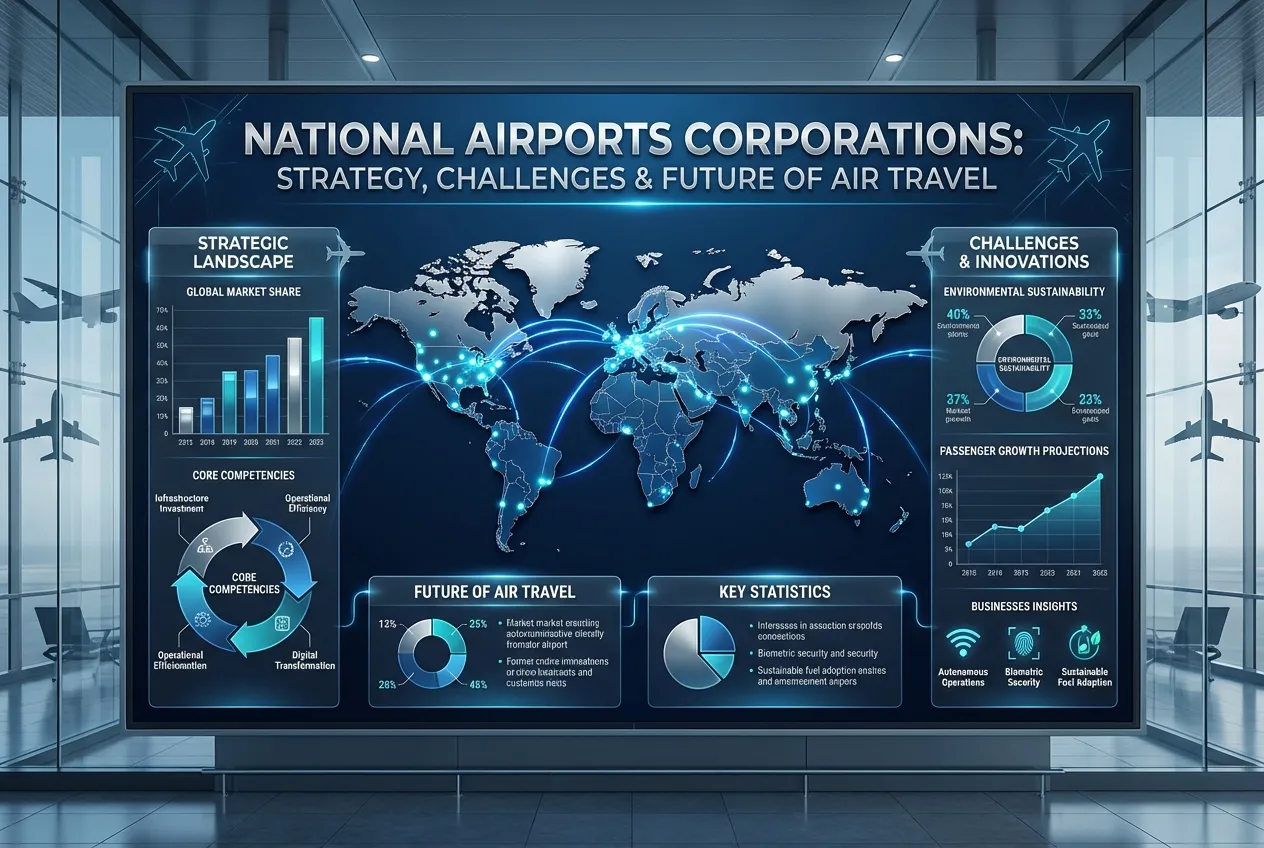
National Airports Corporations: Strategy, Challenges & Future of Air Travel

by d.son.madden@gmail.com February 2, 2026
written by d.son.madden@gmail.com

The Centralized Nerve Center of Global Mobility

Imagine a day where 10 million people take to the skies, their journeys orchestrated through a complex, interconnected web of runways, terminals, and air traffic control systems. At the heart of this global ballet in many nations lies a singular, powerful entity: the National Airports Corporation (NAC). Unlike decentralized, city-owned airport models, an NAC represents a centralized strategy for governing a country’s most critical aviation infrastructure. This model, responsible for hubs that can drive over 4% of a nation’s GDP according to some economic studies, embodies a profound commitment to strategic, unified development. It’s a choice that balances monumental economies of scale against the risks of systemic vulnerability. This article delves deep into the world of National Airports Corporations, examining their strategic imperatives, the modern management philosophies that guide them, their inherent advantages and challenges, and the innovative paths they must forge to navigate the future of aviation.

Sommaire

  • Understanding the National Airports Corporation Model
    • Defining the Centralized Authority
    • Core Mandates and Strategic Objectives
  • Comparing Modern Management Strategies
    • Agile vs. Traditional Project Management in Aviation Megaprojects
    • Top-Down Strategic Command vs. Bottom-Up Operational Innovation
  • The Strategic Pros and Cons of Centralized Airport Management
  • Comparative Table: NAC Management & Operational Models
  • What to Avoid: Common Pitfalls for National Airports Corporations
  • Real-World Use Cases: NACs in Action
  • Navigating the Future: Innovation and Adaptation
  • Frequently Asked Questions (FAQ)
  • References & Authority Sources

Understanding the National Airports Corporation Model

Defining the Centralized Authority

A National Airports Corporation is a state-owned or state-mandated entity vested with the responsibility of developing, operating, and managing multiple airports within a country, often including the primary international gateway(s) and a network of regional facilities. This contrasts with models where airports are independently owned by municipalities, private consortia, or through purely private-public partnerships (PPPs) for individual sites.

The creation of an NAC is typically a deliberate policy decision aimed at ensuring aviation development aligns with national economic strategy, uniform security protocols, and coordinated infrastructure investment. It turns airports from isolated transit points into nodes in a strategically planned national network.

Core Mandates and Strategic Objectives

The mission of an NAC extends far beyond daily operations. Its core mandates usually encompass:

  1. National Infrastructure Leadership: Planning and executing long-term, capital-intensive projects like new runways, terminal expansions, and technological overhauls across its portfolio.
  2. Economic Catalyst Management: Actively leveraging airports as engines for job creation, tourism growth, and foreign direct investment, often in coordination with national tourism and trade ministries.
  3. Standardization and Safety: Implementing consistent safety, security, and service quality standards across all managed airports, creating a reliable national brand for air travel.
  4. Network Optimization: Balancing traffic and resources between major international hubs and regional airports to ensure national connectivity and prevent congestion at a single point.
  5. Financial Sustainability: Generating sufficient revenue—from aeronautical charges (landing fees) to non-aeronautical commercial activities (retail, advertising)—to fund operations and future investments without over-relying on state subsidies.

Pro-Tip: For an NAC, the most critical strategic document is its Master Plan. This isn’t just a construction blueprint; it’s a 20-30 year integrated forecast aligning capacity growth with economic demography, environmental constraints, and technological trends. Ensuring this plan is dynamic and regularly revisited is paramount.

Comparing Modern Management Strategies

The scale and complexity of managing a national airport portfolio demand sophisticated management approaches. The debate often centers on project execution and organizational culture.

Agile vs. Traditional Project Management in Aviation Megaprojects

  • Traditional (Waterfall) Approach: This linear, phase-gated method has long been the industry standard for massive infrastructure projects like terminal construction. It involves detailed upfront planning, fixed scopes, sequential execution (design, bid, build), and a clear hierarchy. Its strength lies in predictability for regulatory compliance and large-scale financing.
  • Agile Methodology: Borrowed from software development, Agile emphasizes iteration, flexibility, and cross-functional collaboration. In an NAC context, Agile might be applied to digital transformation projects (e.g., rolling out a new passenger app), process re-engineering, or retail planning.
  • Analysis: The strategic impact is significant. A purely traditional approach can lead to projects that are obsolete by completion in our fast-changing world. A purely Agile approach is untenable for concrete-and-steel megaprojects. The winning strategy is a hybrid: Traditional for major physical infrastructure, ensuring regulatory and financial rigor, and Agile for supporting technology, services, and operational processes, allowing rapid adaptation to passenger needs and market shifts. The outcome is an NAC that can build a terminal on time and budget while also deploying a cutting-edge, user-friendly biometric boarding system within it.

Top-Down vs. Bottom-Up Strategic Innovation

  • Top-Down Strategy: Characteristic of many traditional NACs, this model involves central leadership setting clear directives, standards, and goals that cascade down through regional airport managers and departments. It ensures alignment with national policy, consistent branding, and centralized procurement efficiency.
  • Bottom-Up Innovation: This approach empowers frontline staff—from security agents and maintenance crews to retail managers—to identify problems, suggest improvements, and pilot new processes. It harnesses ground-level expertise often invisible to corporate strategists.
  • Analysis: A rigid top-down model can stifle local initiative and make the corporation sluggish in responding to unique challenges at specific airports. A purely bottom-up model can lead to fragmentation and inconsistency. The most effective modern NACs foster a “guided empowerment” culture. Central leadership sets the “what” (the vision, safety standards, financial targets) and the “why” (national competitiveness), while local teams have autonomy on the “how” (operational execution, local partnerships, passenger engagement tactics). This balances strategic coherence with operational agility.

The Strategic Pros and Cons of Centralized Airport Management

Pros:

  • Economies of Scale & Purchasing Power: An NAC can negotiate unified contracts for fuel, technology, and retail, driving down costs across the network.
  • Strategic Capital Allocation: It can cross-subsidize essential but less profitable regional airports with revenue from major hubs, maintaining vital national connectivity.
  • Standardized Passenger Experience: Travelers can expect consistent security, wayfinding, and service levels nationwide, building trust in the national travel brand.
  • Unified Crisis Response: In events like pandemics or national emergencies, an NAC can implement coordinated responses, resource sharing, and communication protocols swiftly.
  • Attractiveness to Airlines: A single point of contact for route planning across a network can be attractive for airlines looking to develop domestic and international connectivity.

Cons:

  • Bureaucratic Inertia: Large, state-linked entities can become slow, risk-averse, and resistant to change, lagging behind innovative private operators.
  • Systemic Risk: Operational failures, labor disputes, or IT outages can potentially disrupt the entire national network simultaneously.
  • “One-Size-Fits-All” Pitfall: Solutions designed for the major hub may be inefficient or inappropriate for smaller regional airports with different passenger profiles and needs.
  • Political Influence: Investment decisions and senior appointments can be susceptible to political pressure rather than pure commercial or operational logic.
  • Potential for Monopolistic Behavior: A lack of direct competition between airports in the network could, without careful regulation, lead to higher charges for airlines and passengers.

Comparative Table: NAC Management & Operational Models

AspectCentralized Command ModelDevolved Authority ModelHybrid/Corporate Model
GovernanceStrong central board; regional managers as implementers.Central board sets policy; regional airports have significant operational/financial autonomy.Holding company structure; subsidiaries operate airports with performance contracts.
Strategic FocusNational coherence, standardization, and major project delivery.Local market responsiveness, entrepreneurship at airport level.Balancing group synergy with local agility; shared services where beneficial.
Investment DecisionsMade centrally, prioritizing the national network.Largely decentralized, based on local business cases.Central approval for major CapEx; local control over operational spending.
Innovation SourcePrimarily top-down from central strategy/R&D units.Primarily bottom-up from individual airport teams.Both; central incubators for group-wide tech, local pilots for service innovation.
Best Suited ForSmall to mid-sized nations or those building a new, unified aviation system.Large, geographically diverse nations with strong regional identities.Mature NACs seeking efficiency and scale without losing local relevance.
Key LimitationCan stifle local initiative and slow response to local issues.Risk of fragmentation, duplicated efforts, and inconsistent national standards.Complex to manage; requires clear performance metrics and strong group culture.

What to Avoid: Common Pitfalls for National Airports Corporations

  1. Neglecting the Regional Network: Obsessing over the flagship megahub while allowing regional airports to decay. This stifles domestic economic development and overloads the main hub.
  2. Underestimating Digital Transformation: Treating IT as a cost center rather than the core of future passenger experience, operational efficiency, and revenue generation.
  3. Ignoring Community and Environmental Stakeholders: Failing to engage with local communities on noise, expansion plans, and sustainability. This leads to legal battles, reputational damage, and project delays.
  4. Over-Reliance on Aeronautical Revenue: Neglecting the commercial (non-aeronautical) potential of retail, dining, advertising, and real estate, which are key to financial resilience.
  5. Siloed Operations: Allowing security, retail, maintenance, and airline operations to work in isolation, creating friction points that degrade passenger flow and experience.
  6. Rigid Adherence to Outdated Master Plans: Treating a 20-year master plan as an immutable document rather than a living framework that requires periodic, strategic reassessment.

Pro-Tip: The most successful NACs institutionalize “Red Team” exercises, where an independent internal or external group is tasked with actively trying to disrupt operations, find security flaws, or poke holes in strategic plans. This builds resilience.

Real-World Use Cases: NACs in Action

1. Network Optimization & Economic Development:
An NAC in a developing nation used its centralized authority to strategically re-route some international cargo traffic from its congested coastal hub to an underutilized inland airport with excellent runway capacity. By offering incentive packages to freight airlines and simultaneously investing in road and cold-chain logistics at the inland site, they spurred economic growth in a neglected region and decongested the main hub, creating a win-win scenario that a single-airport operator would never attempt.

2. Unified Technology Roll-Out for Enhanced Security & Flow:
Faced with rising passenger numbers, a European NAC deployed a centralized, cloud-based passenger processing platform across its six major airports. This allowed for the introduction of biometric-enabled journey tracking (from curb to gate) that was consistent nationwide. A passenger enrolled at one airport could use the same fast-track process at another. This improved security (unified watchlists), dramatically reduced wait times, and created a valuable data asset for optimizing resource allocation across the network.

3. Crisis Management and Brand Protection:
During a major volcanic ash disruption that closed airspace, the NAC acted as the single point of truth and coordination. It orchestrated a coordinated passenger communication strategy across all airports, managed the re-accommodation and care logistics for tens of thousands of stranded passengers using resources from the entire network, and presented a unified front to airlines and regulators. This protected the nation’s aviation brand and demonstrated the value of centralized crisis command.

Pro-Tip: When evaluating technology, NACs must prioritize interoperability and open API standards. A system that locks you into one vendor or cannot share data with airlines, border control, or retail tenants will become a costly liability, not an asset.

Navigating the Future: Innovation and Adaptation

The future for National Airports Corporations hinges on balancing their foundational role as infrastructure stewards with the agility of customer-centric tech companies. Key focus areas include:

  • Sustainability as Strategy: Moving beyond compliance to making net-zero roadmaps central to their mandate. This involves large-scale investments in Sustainable Aviation Fuel (SAF) infrastructure, on-site renewable energy, and circular economy principles for waste and water.
  • Data as a Core Asset: Treating the vast flows of passenger, operational, and commercial data as a strategic asset to optimize everything from predictive maintenance for baggage systems to personalized retail offers, all while rigorously protecting privacy.
  • The Intermodal Hub: Evolving airports from air travel endpoints to seamless multimodal transportation centers, integrating with high-speed rail, urban air mobility (e.g., air taxis), and digital ground transportation platforms.
  • Resilience and Adaptability: Building physical and operational flexibility to withstand shocks—from climate events to health crises—into the DNA of infrastructure and planning.

Pro-Tip: The next frontier of NAC revenue may not be from passengers directly, but from monetizing the airport as a “living lab” or innovation district. Partnering with tech firms to test autonomous vehicles, IoT systems, or new retail concepts on-site can generate lease revenue and invaluable operational insights.

Frequently Asked Questions (FAQ)

Q1: What is the main difference between a National Airports Corporation and a privatized airport?
A: An NAC is typically state-controlled and operates with national strategic objectives (e.g., connectivity, security, economic development). A privatized airport is owned and operated by private investors or a consortium, with a primary focus on profitability and shareholder returns, though regulated by government agreements.

Q2: Do National Airports Corporations improve efficiency?
A: They can, through economies of scale and centralized procurement. However, efficiency gains depend heavily on management quality. Poorly managed NACs can suffer from bureaucratic inefficiency, while well-run ones leverage their scale for significant cost and operational advantages.

Q3: How do NACs fund massive expansion projects?
A: Through a mix of sources: internal cash flow from operations, bond issuances on capital markets, loans from multilateral development banks, and sometimes direct state funding or public-private partnerships (PPPs) for specific terminals or runways.

Q4: Can an NAC have competition?
A: Yes, indirectly. Their main competition is other airline hubs in neighboring countries or regions. They also compete to attract airlines and passengers by offering superior facilities, efficiency, and connectivity. Domestically, some models allow regional airports limited commercial autonomy.

Q5: Are passengers usually happier with NAC-run or privately-run airports?
A: There is no definitive correlation. Passenger satisfaction depends on specific airport management, investment levels, and local culture, not solely on the ownership model. A well-funded and customer-focused NAC can outperform a neglected private operator, and vice-versa.

Q6: How does an NAC handle relationships with diverse airlines?
A: Through a dedicated airline partnership or aeronautical commercial team. They negotiate airport slots, landing fees, and incentive packages for new routes. A key role is to be a neutral facilitator, balancing the needs of legacy carriers, low-cost carriers, and cargo operators.

Q7: What happens during labor strikes at an NAC?
A: As a single employer across multiple airports, labor disputes at an NAC can have a nationwide impact, leading to coordinated cancellations. This underscores the need for proactive, constructive labor relations and contingency planning as a critical risk management function.

Q8: Is the NAC model more common in certain parts of the world?
A: Yes. It is prevalent in many Asian, Middle Eastern, and African nations where aviation development is seen as a strategic, state-led project. In contrast, Europe and North America have more mixed models of private, municipal, and hybrid ownership.

Q9: How do NACs contribute to national security?
A: They implement and enforce standardized national security protocols across all airports, working closely with homeland security and border control agencies. This centralized control is seen as a key advantage for ensuring uniform, high-security standards.

Q10: What’s the biggest challenge facing NACs today?
A: Digital transformation and climate action. Modernizing legacy IT systems across an entire portfolio while simultaneously financing the multi-billion dollar transition to sustainable, low-carbon aviation infrastructure is a dual challenge of unprecedented scale and complexity.

February 2, 2026 0 comments
0 FacebookTwitterPinterestEmail
The National Airport Corporation: More Than Infrastructure A Strategic Blueprint for the 21st Century
Technology

The National Airport Corporation: More Than Infrastructure A Strategic Blueprint for the 21st Century

by d.son.madden@gmail.com February 2, 2026
written by d.son.madden@gmail.com

In a world where over 4.5 billion passengers take to the skies annually, airports are no longer mere transit points; they are complex economic engines, technological frontiers, and critical national infrastructure. At the heart of this transformation is a powerful, often misunderstood entity: the National Airports Corporation. This isn’t just about managing runways and terminals. It’s about strategic national asset management at a scale few other institutions can match. Consider this: a single, well-connected, efficiently run national airport hub can contribute over 1.5% to a country’s GDP and support hundreds of thousands of jobs. The shift from fragmented, individual airport management to a consolidated


Sommaire

1. Defining the Modern National Airports Corporation

  • From Local Authority to Strategic Powerhouse
  • Core Mandates and Responsibilities

2. The Strategic Imperatives Driving Consolidation

  • Economies of Scale and Financial Muscle
  • Standardization and Operational Resilience
  • National Branding and Global Competitiveness
  • Accelerating Technological and Sustainable Innovation

3. Comparing Modern Management Strategies

  • Agile vs. Traditional Hierarchical Management
  • Top-Down Command vs. Bottom-Up Empowerment

4. Pros & Cons of the National Airports Corporation Model

5. Comparative Table: Management Models for a National Airports Corporation

6. What to Avoid: Common Strategic and Operational Pitfalls

7. Real-World Use Cases and Applications

  • Use Case 1: Integrated Digital Passenger Experience
  • Use Case 2: Centralized Sustainable Infrastructure Investment
  • Use Case 3: National Cargo and Logistics Optimization

8. Frequently Asked Questions (FAQ)

9. References & Authority Sources


1. Defining the Modern National Airports Corporation

From Local Authority to Strategic Powerhouse

Historically, major airports were often managed as individual municipal or regional entities. This led to inconsistencies, uneven development, and internal competition that hampered a nation’s overall aviation strategy. The modern National Airports Corporation (NAC) is a paradigm shift. It is a state-owned or quasi-public corporation entrusted with the ownership, management, development, and sometimes regulation of a nation’s key airport assets. Its scope typically encompasses a network of international gateways, regional connectors, and sometimes even smaller domestic facilities. The primary goal is to move from siloed management to a unified national strategy, where each airport in the network plays a specific, complementary role in the nation’s economic and transportation framework.

Core Mandates and Responsibilities

The mandate of a successful NAC extends far beyond day-to-day operations. It is multi-faceted:

  • Asset Management & Master Planning: Developing 30-50 year master plans for each airport and the network as a whole, ensuring phased capacity growth aligns with national demand forecasts.
  • Capital Investment & Financing: Leveraging the corporation’s collective balance sheet to secure favorable financing for multi-billion-dollar infrastructure projects, from new terminals to runway extensions.
  • Commercial & Revenue Strategy: Managing a vast non-aeronautical revenue portfolio—duty-free, retail, advertising, real estate—across the network to cross-subsidize essential aeronautical operations and keep airline charges competitive.
  • Technology & Innovation Leadership: Deploying centralized IT systems, biometrics, and data analytics platforms across the network to drive efficiency and a seamless passenger experience.
  • Safety, Security & Compliance: Establishing and enforcing uniform, gold-standard safety and security protocols at all facilities, often in close coordination with national agencies.
  • Sustainability & ESG Leadership: Leading the national aviation industry’s transition to net-zero through centralized investments in solar power, sustainable aviation fuel (SAF) infrastructure, and circular economy initiatives.

Pro-Tip: The most successful National Airports Corporations act as market-makers, not just landlords. They proactively use data analytics to identify unserved or underserved air routes and work strategically with airlines to launch new services, stimulating regional economic development.

2. The Strategic Imperatives Driving Consolidation

Why are countries increasingly adopting this model? The drivers are powerful and interrelated.

Economies of Scale and Financial Muscle. A national airports corporation can achieve procurement savings on everything from jet bridges to IT software. More importantly, it can pool revenue from profitable megahubs to fund essential but less profitable infrastructure in regional or remote areas, fulfilling a social and economic connectivity mandate that a purely private, profit-driven operator might neglect.

Standardization and Operational Resilience. Passengers and airlines benefit from standardized processes, wayfinding, and service levels across the country’s airports. From an operational standpoint, a NAC can develop a centralized “nerve center” for air traffic flow management and crisis response. During disruptions like weather events, it can mobilize resources and expertise from across the network to the affected node, enhancing system-wide resilience.

National Branding and Global Competitiveness. In the global competition for tourism, trade, and investment, a nation’s airports are its front door. A NAC can ensure a consistent, high-quality “brand experience” from arrival to departure, strengthening the country’s global image. It can also make strategic decisions—like developing one airport as a premium hub and another as a low-cost carrier base—to capture different market segments without internal cannibalization.

Accelerating Technological and Sustainable Innovation. The capital intensity and risk of deploying next-gen technologies—like full biometric travel corridors, AI-powered predictive maintenance, or hydrogen fuel cell infrastructure—are immense. A NAC can run pilot programs at one facility and scale successes across the network, de-risking innovation and accelerating the return on investment for the nation.

3. Comparing Modern Management Strategies

The structure of a national airports corporation is only half the story. Its management philosophy determines its agility and effectiveness in a fast-changing world.

Agile vs. Traditional Hierarchical Management

The traditional model for a large, infrastructure-heavy entity is hierarchical, with rigid departmental silos (Operations, Commercial, Engineering, Finance) and slow, waterfall-style project management. This can stifle innovation and slow response times.

The Agile management approach, borrowed from tech, is gaining traction. It involves creating cross-functional “squads” or teams focused on specific outcomes, like “Improving Passenger Flow at Security” or “Rolling Out the New App.” These teams have the autonomy to experiment, iterate quickly, and fail fast. For a NAC, applying Agile principles to digital projects, commercial retail layouts, or process redesign can dramatically speed up improvement cycles.

  • Outcome: A traditional approach might take 18 months to procure and install new baggage scanners. An agile-equipped NAC could pilot three different scanner technologies with different processes at three different airports within 6 months, select the best, and roll out a proven solution network-wide in 12.

Top-Down Command vs. Bottom-Up Empowerment

The Top-Down model is classic command-and-control. Strategy is set at the corporate HQ, and individual airport managers are primarily tasked with execution. This ensures alignment but can demotivate local leaders and make the organization slow to spot local opportunities or threats.

The Bottom-Up Empowerment model pushes significant strategic and budgetary authority down to individual airport CEOs within the network. They are treated as entrepreneurs running their own “businesses” within the broader corporate brand and financial framework. This fosters local innovation and accountability.

  • Strategic Impact: The optimal model is a hybrid. The corporate center sets the non-negotiable national strategy for safety, security, major capital allocation, and technology platforms. Meanwhile, empowered local airport leaders have the freedom to tailor commercial offerings, community partnerships, and minor operational processes to their specific market. For example, an airport in a wine region might develop a unique retail and lounge experience centered on local vineyards, something a rigid top-down model might never conceive.

Pro-Tip: Implement a “dual-track” operating model. Maintain a stable, hierarchical structure for safety-critical, regulated functions (airside operations, security). Alongside it, create agile, project-based “ventures” for innovation in areas like commercial experience and digital services. This balances essential control with necessary creativity.

4. Pros & Cons of the National Airports Corporation Model

A balanced view is crucial for understanding this complex governance model.

Pros:

  • Strategic Coordination: Eliminates destructive competition between a nation’s own airports and aligns them toward common national goals (e.g., tourism growth, export facilitation).
  • Financial Efficiency and Cross-Subsidization: Enables massive, lower-cost financing and allows revenue sharing to support essential but unprofitable routes and airports, ensuring national connectivity.
  • Standardized Excellence: Raises the service, safety, and security floor across the entire network, improving the country’s overall aviation reputation.
  • Innovation at Scale: Has the capital and mandate to invest in long-term, transformative projects that private operators might avoid due to short-term return horizons.

Cons:

  • Bureaucracy and Inertia Risk: Can become a slow-moving, monolithic bureaucracy if not carefully managed, stifling local initiative and quick decision-making.
  • “One-Size-Fits-All” Pitfall: Over-standardization can ignore the unique needs and opportunities of local markets, leading to generic and suboptimal outcomes.
  • Political Interference: As a state-owned entity, it can be vulnerable to political meddling in operational decisions, site selections, or hiring, compromising commercial and technical rigor.
  • Reduced Market Competition: The absence of competing private operators within the network could, in theory, reduce the pressure for peak efficiency and customer service innovation, though this is mitigated by global competition between airline hubs.

5. Comparative Table: Management Models for a National Airports Corporation

Model / AspectTraditional HierarchicalAgile & EmpoweredHybrid (Centrally Directed, Locally Empowered)
Decision-Making SpeedSlow, requires multiple approvals.Fast, within empowered teams.Varied: Fast on local/commercial issues, deliberate on strategic/capital issues.
Innovation SourceTop-down, often from corporate R&D or consultants.Bottom-up and continuous, from cross-functional teams.Both: Corporate sets tech/platform direction; local units drive market-specific innovation.
Risk ProfileRisk-averse. Seeks perfect, large-scale solutions.Embraces controlled risk and “fast failure” for learning.Managed risk. High tolerance for commercial experiment, zero tolerance for safety/security deviation.
Employee EngagementCan be lower due to silos and limited autonomy.Typically higher due to ownership and clear outcomes.High for local leaders with P&L responsibility; can vary in central functions.
Best ForManaging highly regulated, safety-critical core operations.Driving digital transformation, passenger experience projects, and commercial innovation.The ideal model for most NACs. Provides strategic coherence with operational agility.
Key LimitationCan become inefficient and unresponsive to market changes.Can create chaos if applied to all functions; requires strong cultural foundation.Extremely difficult to design and govern effectively; requires exceptional leadership.

6. What to Avoid: Common Strategic and Operational Pitfalls

  • Neglecting the Local Context: Imposing identical terminal designs, retail mixes, and processes on a major hub and a small regional airport. This wastes resources and alienates local communities.
  • Underestimating Change Management: Deploying a new network-wide IT system without investing 3-5x more in training, support, and change management for the thousands of employees and tenants who must use it.
  • Letting Politics Drive Investment: Allowing major capital projects (e.g., building a new airport) to be determined by political election cycles rather than rigorous, independent demand forecasting and business case analysis.
  • Siloed Data Management: Having passenger data, operational data, and commercial data locked in different systems that don’t communicate. This prevents the NAC from gaining a 360-degree view of performance and passenger value.
  • Focusing Only on the Passenger: Forgetting that the national airports corporation serves two equally important customers: the passenger and the airline. Over-commercializing spaces or raising aeronautical charges too high can drive airlines to competing hubs in other countries.

Pro-Tip: To avoid the “one-size-fits-all” trap, mandate that every national standard or initiative includes a “local adaptation clause.” The corporate center sets the objective and minimum standard, but local managers have a documented process to propose a tailored implementation plan that better fits their market.

7. Real-World Use Cases and Applications

Use Case 1: Integrated Digital Passenger Experience

A NAC develops a single mobile app for its entire network. The app isn’t just for flight info; it integrates booking, biometric pre-verification, wayfinding, retail discounts, and ground transport (taxis, trains, rental cars). A passenger traveling from Airport A to Airport C via Hub B has a seamless, single-identity journey across all three facilities. The NAC monetizes the platform through targeted promotions and data insights, while dramatically improving passenger satisfaction scores network-wide.

Use Case 2: Centralized Sustainable Infrastructure Investment

To meet a national 2030 carbon reduction target, the NAC decides to transition all ground service equipment (baggage tugs, belt loaders) across its top 5 airports to electric. Instead of each airport running separate procurement, it uses its bulk purchasing power to secure a favorable national contract with an EV manufacturer. It then centrally funds and project-manages the installation of a standardized charging infrastructure network at each airfield, sharing lessons learned in real-time. This achieves scale, speed, and cost savings impossible under a fragmented model.

Use Case 3: National Cargo and Logistics Optimization

Recognizing the strategic importance of air freight, the NAC’s corporate team analyzes national export/import data. It identifies that a specific region produces high-value, time-sensitive perishable goods (e.g., seafood, berries) but lacks direct cargo capacity. The NAC uses its relationships with cargo airlines to incentivize the launch of a direct freighter service from the regional airport to a key Asian market. Simultaneously, it invests in cold-chain facilities at both the origin and major hub airports. This stimulates regional economic growth and increases overall cargo tonnage for the network.

Pro-Tip: Treat real estate not as a source of rent, but as a strategic canvas. Use vacant land on airport property to host SAF production plants, data centers (powered by airport energy microgrids), or e-commerce logistics hubs. This turns the national airports corporation into a true multimodal, economic zone manager.

8. Frequently Asked Questions (FAQ)

Q1: What is the main difference between a National Airports Corporation and a privatized airport group?
A: A NAC is typically state-owned with a public service and national development mandate. A privatized group (like many European airport operators) is publicly traded and primarily accountable to shareholders, focusing on profitability and return on investment, which can sometimes conflict with unprofitable but socially necessary services.

Q2: Doesn’t a monopoly NAC lead to higher fees for airlines and passengers?
A: Not necessarily. While it has market power, a NAC’s fees are often regulated by a government entity. Furthermore, its scale efficiencies and non-aeronautical revenue can actually subsidize and keep aeronautical charges (landing fees) competitive to attract airline traffic.

Q3: How does a NAC improve my experience as a passenger?
A: You benefit from standardized, high-quality facilities and processes across the country, the ability to use the same loyalty/app ecosystem at multiple airports, and potentially smoother connections due to centrally managed hub operations.

Q4: Can a NAC manage both huge international hubs and small regional airports effectively?
A: This is its core challenge and advantage. The successful ones do so by adopting a portfolio strategy, applying different performance metrics and management styles to each type of asset, rather than a uniform approach.

Q5: Are National Airports Corporations financially sustainable?
A: The successful ones are highly sustainable. They function like large, diversified infrastructure businesses, with revenue streams from airlines, passengers (retail, F&B), real estate, and advertising. Their creditworthiness allows them to raise large sums for investment at favorable rates.

Q6: What role does a NAC play in environmental sustainability?
A: A leading role. It can mandate net-zero targets for its entire network, invest in large-scale solar farms to power airports, build the infrastructure for sustainable aviation fuel (SAF) distribution, and set binding sustainability criteria for all its commercial partners.

Q7: How does this model affect airline competition?
A: A well-run NAC provides a neutral, high-quality infrastructure platform for all airlines to compete on. It should not show favoritism. Its goal is to maximize overall traffic, which often means fostering a healthy mix of full-service, low-cost, and cargo carriers.

Q8: Is the trend moving toward more National Airports Corporations?
A: Yes, particularly in emerging economies and nations looking to strategically upgrade their aviation infrastructure as a catalyst for growth. Even in regions with privatized airports, there is a strong trend toward consolidation into large, multinational private groups, mimicking the scale benefits of a NAC.

Q9: Who holds a NAC accountable?
A: Ultimately, the government and the public. Accountability is exercised through parliamentary oversight, independent transport regulators, published annual reports, and service quality benchmarks. Transparency is crucial.

Q10: What’s the biggest challenge in transitioning to a NAC model from a fragmented system?
A: Cultural integration. Merging different airport teams with distinct local histories and practices into a unified corporate culture with a shared national vision is a monumental human resources and leadership challenge that often takes years.

February 2, 2026 0 comments
0 FacebookTwitterPinterestEmail
Uncategorized

Running macOS and Windows 10 on the Same Computer

by February 2, 2026
written by

Cursus iaculis etiam in

In nullam donec sem sed consequat scelerisque nibh amet, massa egestas risus, gravida vel amet, imperdiet volutpat rutrum sociis quis velit, commodo enim aliquet.

Nunc volutpat tortor libero at augue mattis neque, suspendisse aenean praesent sit habitant laoreet felis lorem nibh diam faucibus viverra penatibus donec etiam sem consectetur vestibulum purus non arcu suspendisse ac nibh tortor, eget elementum lacus, libero sem viverra elementum.

Nulla pharetra, massa feugiat nisi, tristique nisi, adipiscing dignissim sit magna nibh purus erat nulla enim id consequat faucibus luctus volutpat senectus montes.

Lorem Ipsum

Magna enim, convallis ornare

Sollicitudin bibendum nam turpis non cursus eget euismod egestas sem nunc amet, tellus at duis suspendisse commodo lectus accumsan id cursus facilisis nunc eget elementum non ut elementum et facilisi dui ac viverra sollicitudin lobortis luctus sociis sed massa accumsan amet sed massa lectus id dictum morbi ullamcorper.

Morbi ut viverra massa mattis vitae blandit ut integer non vestibulum eros, diam in in et hac mauris maecenas sed sapien fermentum et eu.

February 2, 2026 0 comments
0 FacebookTwitterPinterestEmail
Uncategorized

Apple opens another megastore in China amid William Barr criticism

by February 2, 2026
written by

Cursus iaculis etiam in

In nullam donec sem sed consequat scelerisque nibh amet, massa egestas risus, gravida vel amet, imperdiet volutpat rutrum sociis quis velit, commodo enim aliquet.

Nunc volutpat tortor libero at augue mattis neque, suspendisse aenean praesent sit habitant laoreet felis lorem nibh diam faucibus viverra penatibus donec etiam sem consectetur vestibulum purus non arcu suspendisse ac nibh tortor, eget elementum lacus, libero sem viverra elementum.

Nulla pharetra, massa feugiat nisi, tristique nisi, adipiscing dignissim sit magna nibh purus erat nulla enim id consequat faucibus luctus volutpat senectus montes.

Lorem Ipsum

Magna enim, convallis ornare

Sollicitudin bibendum nam turpis non cursus eget euismod egestas sem nunc amet, tellus at duis suspendisse commodo lectus accumsan id cursus facilisis nunc eget elementum non ut elementum et facilisi dui ac viverra sollicitudin lobortis luctus sociis sed massa accumsan amet sed massa lectus id dictum morbi ullamcorper.

Morbi ut viverra massa mattis vitae blandit ut integer non vestibulum eros, diam in in et hac mauris maecenas sed sapien fermentum et eu.

February 2, 2026 0 comments
0 FacebookTwitterPinterestEmail
Technology

The ‘Sounds’ of Space as NASA’s Cassini Dives by Saturn

by February 2, 2026
written by

Cursus iaculis etiam in

In nullam donec sem sed consequat scelerisque nibh amet, massa egestas risus, gravida vel amet, imperdiet volutpat rutrum sociis quis velit, commodo enim aliquet.

Nunc volutpat tortor libero at augue mattis neque, suspendisse aenean praesent sit habitant laoreet felis lorem nibh diam faucibus viverra penatibus donec etiam sem consectetur vestibulum purus non arcu suspendisse ac nibh tortor, eget elementum lacus, libero sem viverra elementum.

Nulla pharetra, massa feugiat nisi, tristique nisi, adipiscing dignissim sit magna nibh purus erat nulla enim id consequat faucibus luctus volutpat senectus montes.

Lorem Ipsum

Magna enim, convallis ornare

Sollicitudin bibendum nam turpis non cursus eget euismod egestas sem nunc amet, tellus at duis suspendisse commodo lectus accumsan id cursus facilisis nunc eget elementum non ut elementum et facilisi dui ac viverra sollicitudin lobortis luctus sociis sed massa accumsan amet sed massa lectus id dictum morbi ullamcorper.

Morbi ut viverra massa mattis vitae blandit ut integer non vestibulum eros, diam in in et hac mauris maecenas sed sapien fermentum et eu.

February 2, 2026 0 comments
0 FacebookTwitterPinterestEmail
Uncategorized

Broke a Glass? Someday You Might 3-D-Print a New One

by February 2, 2026
written by

Cursus iaculis etiam in

In nullam donec sem sed consequat scelerisque nibh amet, massa egestas risus, gravida vel amet, imperdiet volutpat rutrum sociis quis velit, commodo enim aliquet.

Nunc volutpat tortor libero at augue mattis neque, suspendisse aenean praesent sit habitant laoreet felis lorem nibh diam faucibus viverra penatibus donec etiam sem consectetur vestibulum purus non arcu suspendisse ac nibh tortor, eget elementum lacus, libero sem viverra elementum.

Nulla pharetra, massa feugiat nisi, tristique nisi, adipiscing dignissim sit magna nibh purus erat nulla enim id consequat faucibus luctus volutpat senectus montes.

Lorem Ipsum

Magna enim, convallis ornare

Sollicitudin bibendum nam turpis non cursus eget euismod egestas sem nunc amet, tellus at duis suspendisse commodo lectus accumsan id cursus facilisis nunc eget elementum non ut elementum et facilisi dui ac viverra sollicitudin lobortis luctus sociis sed massa accumsan amet sed massa lectus id dictum morbi ullamcorper.

Morbi ut viverra massa mattis vitae blandit ut integer non vestibulum eros, diam in in et hac mauris maecenas sed sapien fermentum et eu.

February 2, 2026 0 comments
0 FacebookTwitterPinterestEmail
Uncategorized

This Is a Giant Shipworm. You May Wish It Had Stayed In Its Tube.

by February 2, 2026
written by

Cursus iaculis etiam in

In nullam donec sem sed consequat scelerisque nibh amet, massa egestas risus, gravida vel amet, imperdiet volutpat rutrum sociis quis velit, commodo enim aliquet.

Nunc volutpat tortor libero at augue mattis neque, suspendisse aenean praesent sit habitant laoreet felis lorem nibh diam faucibus viverra penatibus donec etiam sem consectetur vestibulum purus non arcu suspendisse ac nibh tortor, eget elementum lacus, libero sem viverra elementum.

Nulla pharetra, massa feugiat nisi, tristique nisi, adipiscing dignissim sit magna nibh purus erat nulla enim id consequat faucibus luctus volutpat senectus montes.

Lorem Ipsum

Magna enim, convallis ornare

Sollicitudin bibendum nam turpis non cursus eget euismod egestas sem nunc amet, tellus at duis suspendisse commodo lectus accumsan id cursus facilisis nunc eget elementum non ut elementum et facilisi dui ac viverra sollicitudin lobortis luctus sociis sed massa accumsan amet sed massa lectus id dictum morbi ullamcorper.

Morbi ut viverra massa mattis vitae blandit ut integer non vestibulum eros, diam in in et hac mauris maecenas sed sapien fermentum et eu.

February 2, 2026 0 comments
0 FacebookTwitterPinterestEmail
Newer Posts
Older Posts

Categories

  • Blog (19)
  • Business (5)
  • education (5)
  • Entertainment (7)
  • Must Read (6)
  • Reviews (3)
  • Technology (10)
  • Uncategorized (20)
  • World (1)

Subscribe

Email
The form has been submitted successfully!
There has been some error while submitting the form. Please verify all form fields again.

Recent Post

  • costco rival launches megastore in Bold Retail Power Move
  • Crackstube Shocking Truth About Risks and Safer Alternatives Online Guide
  • phil or lil of rugrats crossword: Ultimate Fun Puzzle Guide
  • novapg The Ultimate Powerful Guide for Smart Online Success
  • novapg The Ultimate Powerful Guide for Smart Online Success

Tech News

  • Technology
  • Gadget
  • Software
  • Games

Legal

  • Privacy Policy
  • Terms of Service
  • Extra Crunch Terms
  • Code of Conduct
  • Facebook
  • Twitter

@2021 - All Right Reserved. Designed and Developed by PenciDesign


Back To Top
businessmotorring.co.uk
  • Technology
  • Business
  • Finance
  • Education
  • Entertainment
  • Blog
  • Real Estate