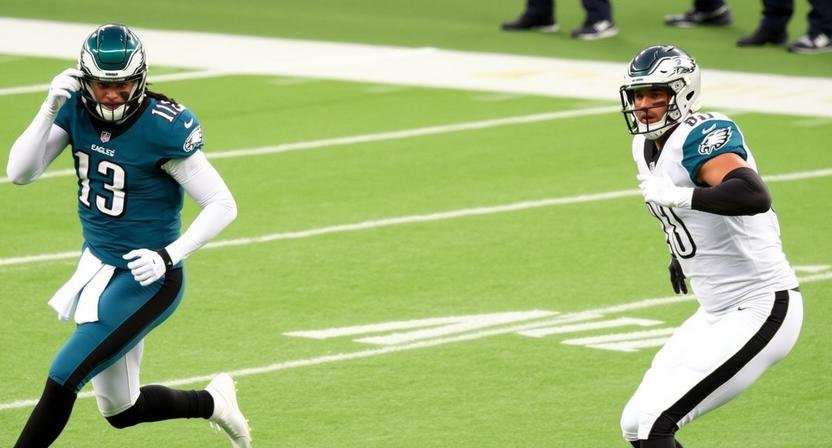
The eagles rookie trade attempt sparked intense discussion across the league. Fans questioned the timing. Analysts debated the value. Meanwhile, front offices quietly studied the move for clues about Philadelphia’s long-term strategy.
In today’s NFL, rookie contracts are gold. Teams build around them. They protect them. They sometimes gamble on them. Therefore, when a franchise like the Philadelphia Eagles explores moving a rookie, it signals something deeper than a simple roster tweak.
This article breaks down the full picture. We will analyze what an eagles rookie trade attempt really means, why it happens, the risks involved, and how it shapes a team’s future.
Understanding the Eagles Rookie Trade Attempt
At its core, an eagles rookie trade attempt refers to the team exploring options to move a recently drafted player. This can happen before the season, during the season, or even shortly after draft day.
However, rookie trades are not common. Most teams prefer to develop young talent. So when it happens, it usually falls into one of several strategic categories:
-
Salary cap maneuvering
-
Scheme mismatch
-
Roster depth imbalance
-
Draft capital recovery
-
Locker room considerations
The Eagles, known for aggressive front-office decisions, often prioritize long-term flexibility. Therefore, a rookie trade discussion is rarely emotional. It is calculated.
Why Would the Eagles Attempt to Trade a Rookie?
Teams do not invest draft capital lightly. Every pick costs scouting hours, analytics modeling, and financial planning. So why move a rookie so soon?
1. Salary Cap Optimization
Rookie contracts are cheap. However, cap flexibility still matters.
If a player was drafted high, the guaranteed money is significant. Therefore, trading that contract early can free future space. This becomes critical when planning extensions for veterans.
For example:
| Factor | Impact on Cap | Strategic Outcome |
|---|---|---|
| High signing bonus | Immediate cap allocation | Limits short-term flexibility |
| Fifth-year option | Long-term financial commitment | Forces early evaluation |
| Positional value | Market-driven salary spikes | Affects extension timing |
The Eagles front office often thinks three years ahead. That mindset drives bold moves.
2. Draft Capital Rebalancing
Sometimes a draft board shifts unexpectedly. A team may select a player based on value, then later realize another roster hole demands attention.
In that case, an eagles rookie trade attempt can recover:
-
Future draft picks
-
A player at a position of need
-
Additional mid-round value
This strategy aligns with modern draft philosophy. Accumulating picks increases probability of hitting on talent.
3. Scheme or Coaching Fit
Coaching changes alter everything.
A rookie drafted under one defensive coordinator may not fit another’s system. Instead of forcing development in a poor fit, the front office might explore trade options.
This is especially true in:
-
Hybrid defensive schemes
-
Wide-zone vs. power-run offenses
-
Coverage-heavy secondaries
Fit matters as much as talent.
The Risks Behind an Eagles Rookie Trade Attempt
Although strategic, rookie trades carry significant risk.
Lost Development Potential
Rookies often struggle early. That is normal. If a team moves on too quickly, it may lose:
-
Long-term upside
-
Breakout performance in year two
-
Cost-controlled starter value
Patience often pays off in the NFL.
Public Perception and Locker Room Impact
Fans interpret a rookie trade attempt as a draft mistake. Players may see it as instability. Therefore, messaging becomes critical.
Front offices must maintain trust. Otherwise, morale dips.
Opportunity Cost
If the player succeeds elsewhere, criticism grows louder. NFL history is filled with players who thrived after early trades.
This risk alone makes every eagles rookie trade attempt a high-stakes decision.
Financial Strategy: The Hidden Driver
While fans focus on performance, front offices focus on numbers.
Rookie contracts follow a structured scale. However, guarantees and signing bonuses create layers of complexity.
Key financial elements include:
-
Dead cap impact
-
Acceleration of guarantees
-
Offset language in contracts
-
Future compensatory pick implications
Philadelphia has historically managed the cap aggressively. Therefore, any rookie trade discussion likely involves long-term planning.
How the Modern NFL Encourages Rookie Asset Management
The league has shifted dramatically in the past decade.
Shorter Evaluation Windows
Coaches face pressure to win immediately. As a result, rookies receive limited development time.
Analytics Influence
Data models project player value based on age, position, and performance trends. If projections decline, teams react quickly.
Positional Market Inflation
Quarterbacks, edge rushers, and receivers command massive salaries. Therefore, rookie contracts at those positions are extremely valuable.
If an eagles rookie trade attempt involves a premium position, the stakes multiply.
Case Study Framework: What Typically Happens After a Rookie Trade Attempt
Although every case differs, common outcomes follow predictable paths:
-
Trade Completed Preseason
Team gains future mid-round pick. Rookie joins new system. Evaluation resets. -
Trade Deadline Movement
Contending team acquires rookie depth. Selling team prioritizes draft capital. -
No Trade Executed
Public attempt leaks. Player stays. Motivation increases. Breakout season follows.
Interestingly, sometimes the mere attempt fuels growth.
Strategic Benefits of a Rookie Trade Attempt
Although risky, there are potential upsides.
Increased Roster Flexibility
Moving a rookie can:
-
Open active roster spots
-
Create cap rollover
-
Reduce positional logjam
Flexibility wins championships.
Improved Draft Leverage
Future picks allow:
-
Trade-up opportunities
-
Compensation for veteran departures
-
Packaging assets in blockbuster deals
The Eagles have used this strategy effectively in past roster builds.
Common Mistakes Teams Make With Rookie Trades
Not every attempt is wise. Several recurring errors appear league-wide.
Overreacting to Limited Sample Size
Four preseason games do not define a career. Yet some teams panic.
Ignoring Development Curves
Offensive linemen and quarterbacks often require multiple seasons.
Undervaluing Character Growth
Young players mature quickly in professional environments.
Smart teams balance patience with realism.
What This Means for the Eagles’ Long-Term Vision
The Eagles operate with a championship window mindset. Therefore, every decision ties back to sustained contention.
An eagles rookie trade attempt might signal:
-
Confidence in scouting depth
-
Aggressive cap planning
-
Immediate competitive urgency
-
Belief in coaching adaptability
It also reflects organizational confidence. Teams afraid of criticism rarely make bold moves.
Evaluating the Front Office Philosophy
Philadelphia’s leadership values flexibility. That philosophy centers on:
-
Draft pick accumulation
-
Strategic veteran contracts
-
Controlled cap rollover
-
Positional premium allocation
Therefore, a rookie trade attempt aligns with long-term asset management.
Statistical Perspective on Rookie Contract Value
Consider league-wide averages:
-
First-round rookies often become full-time starters by year two.
-
Mid-round picks have roughly a 30–40% chance of becoming long-term starters.
-
Undrafted players rarely secure second contracts with their original team.
Because rookie contracts are cost-controlled for four years, their surplus value is enormous. That makes any eagles rookie trade attempt financially significant.
Media Reaction vs. Internal Evaluation
Media narratives often focus on failure. However, internal grading differs.
Front offices use:
-
Film study
-
Practice metrics
-
Strength progression tracking
-
Psychological evaluations
The public sees snaps. Teams see development patterns.
Therefore, an attempted trade may reflect data not visible externally.
Could a Rookie Trade Attempt Signal Bigger Moves?
Yes, and often it does.
Rookie trades sometimes precede:
-
Veteran extensions
-
Major free agent signings
-
Position group restructuring
-
Coaching strategy shifts
When analyzing an eagles rookie trade attempt, context matters more than headlines.
Best Practices for Managing Rookie Assets
Smart organizations follow several principles:
-
Set clear development benchmarks early.
-
Communicate expectations transparently.
-
Avoid emotional reactions to early mistakes.
-
Align scouting with coaching schemes.
-
Model financial projections before acting.
These practices reduce regret.
Long-Term Competitive Implications
If executed well, rookie trades can:
-
Extend championship windows
-
Improve cap balance
-
Increase draft leverage
If executed poorly, they can:
-
Create talent gaps
-
Damage reputation
-
Reduce locker room trust
The margin is thin. Therefore, discipline matters.
Frequently Asked Questions
Why would the Eagles trade a rookie so early?
Teams may explore a move due to scheme fit, cap strategy, or roster imbalance. It does not always mean the player failed.
Does an eagles rookie trade attempt mean the draft pick was a mistake?
Not necessarily. Draft strategy evolves. Sometimes needs change after training camp or free agency.
How often do rookie trades succeed?
Success varies. However, teams that gain future picks often benefit long term. The key factor is return value.
Can a rookie improve after a failed trade attempt?
Absolutely. Motivation often increases. Some players respond strongly to external doubt.
Is trading rookies becoming more common?
Yes. Modern analytics and cap management encourage proactive asset movement.
Final Thoughts on the Eagles Rookie Trade Attempt
The eagles rookie trade attempt represents more than a single roster move. It reflects philosophy, risk tolerance, and long-term planning.
While fans often react emotionally, front offices operate analytically. They weigh cap flexibility, draft capital, scheme alignment, and competitive timelines.
In the modern NFL, adaptability wins. Therefore, even bold rookie trade exploration can be part of a disciplined championship strategy.
Key Takeaways
-
Rookie trades are strategic, not impulsive.
-
Financial planning drives many decisions.
-
Scheme fit matters as much as talent.
-
Patience and timing determine success.
-
Long-term flexibility remains the ultimate goal.
As the league evolves, teams that manage young assets wisely gain an edge. Watching how the Eagles handle rookie trade scenarios offers insight into their broader competitive blueprint.
If you follow roster construction closely, monitor future draft moves and cap adjustments. They often reveal the real story behind any eagles rookie trade attempt.