
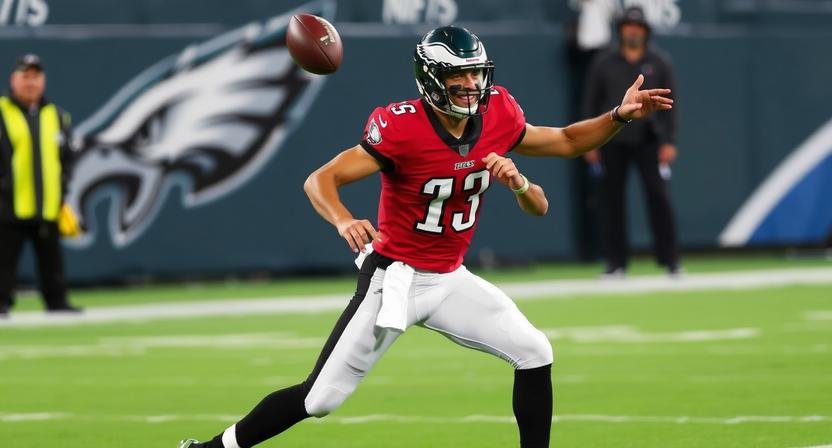
The Philadelphia Eagles do not sit still on draft day. While most teams stay patient and let the board fall to them, Howie Roseman works the phones. He moves up. He moves back. Sometimes he does both in the same round. When news breaks about an eagles rookie trade attempt, it is rarely a surprise anymore. What surprises people is how often these moves actually work.
This is not a team afraid to make a mistake. The Eagles operate with a clear philosophy: accumulate assets, trust your evals, and never fall in love with just one guy. But that does not mean every trade attempt succeeds. Some fall apart. Others never get off the ground. And a few become the defining moments of a draft class.
Let’s break down why Philadelphia stays aggressive, what drives their decision-making, and what we can learn from the times they pushed all their chips in.
Why the Eagles Stay Aggressive on Draft Day
The modern NFL rewards teams that draft well. But it also rewards teams that know when to trade. Philadelphia has embraced both.
Howie Roseman operates with a simple mindset. If you like a player, go get him. Waiting costs you. The difference between landing a franchise cornerstone and settling for a rotational piece often comes down to a single phone call.
The Eagles have also learned from past mistakes. There was a time when they sat back and watched other teams jump them for impact players. That does not happen anymore. Now, they identify their targets early and map out trade scenarios before round one even starts.
Another factor is the roster construction. When you have a Super Bowl caliber team, you do not need twelve rookies. You need difference makers. You need guys who can contribute immediately. That shift in philosophy turns mid-round picks into ammunition for moving up.
How a Typical Eagles Rookie Trade Attempt Unfolds
The process starts weeks before the draft. Philadelphia compiles its board, but they also study which teams might be willing to move back. They look for partners picking ahead of them who lack depth or need multiple players.
When the draft clock starts, the Eagles stay ready. They monitor the run at certain positions. If a player they love starts sliding, Roseman checks in with the team on the clock. Sometimes the deal happens fast. Sometimes it takes multiple calls.
What does the actual trade look like? Usually, Philadelphia sends a package of mid-round picks to move up. They rarely mortgage future first-rounders. Instead, they bundle picks from the current draft or toss in a future Day 3 selection.
The 2022 draft is a perfect example. The Eagles moved up twice in the first round. First for Jordan Davis, then for AJ Brown. Both moves required different approaches. One was about getting a defensive anchor. The other was about acquiring a proven receiver through a sign-and-trade.
The Risks of an Aggressive Trade Strategy
Not every eagles rookie trade attempt works out. Some fail because the price becomes too steep. Others fail because the player does not meet expectations.
You also risk losing depth. When you trade multiple picks for one player, your margin for error shrinks. If that player busts, you missed on two or three other prospects who could have helped the roster.
The Eagles felt this in 2016 when they traded up for Carson Wentz. That move cost them a fortune. It worked for a while, but eventually the lack of cheap rookie talent caught up. They had no choice but to keep paying veterans to fill holes.
There is also the pressure factor. When you trade up for a player, you are telling the world you believe in him. That belief comes with expectations. Fans expect immediate production. Coaches feel obligated to play him. Sometimes that works in the player’s favor. Sometimes it creates unnecessary pressure.
When Trading Up Backfires Across the League
The Eagles have hit on most of their recent trades, but other teams show us the downside. The San Francisco 49ers paid a massive haul for Trey Lance. Three first-round picks, plus a third. He started four games. Now he is a backup elsewhere.
The Chicago Bears traded up for Mitchell Trubisky. They passed on Deshaun Watson and Patrick Mahomes to do it. That single decision set the franchise back half a decade.
These examples do not mean teams should stop trading up. They just mean you better be right.
Real-World Example: The 2023 Eagles Draft
Philadelphia entered the 2023 draft with clear needs. They needed a defensive playmaker. They needed offensive line depth. They also needed to get younger at key positions.
The eagles rookie trade attempt that year came early. They held pick 10, but they saw Jalen Carter still on the board. Carter was arguably the most talented defender in the entire draft. Off-field concerns caused him to slide, but the Eagles did not hesitate.
They moved up one spot to get him. Pick 10 and a fourth-rounder went to Chicago for pick 9. Minimal cost, massive reward. Carter became a cornerstone of their defense and a Defensive Rookie of the Year candidate.
Later in that same draft, they traded back into the first round for Nolan Smith. That move cost them a future third-rounder. Again, they identified a player they believed in and went and got him.
Two trades. Two defensive starters. Minimal long-term damage to the draft capital cupboard.
Common Mistakes Teams Make When Trading Up
The Eagles avoid certain traps. Other teams do not. Here is what separates successful trade-ups from costly failures:
| Mistake | Why It Hurts | How Eagles Avoid It |
|---|---|---|
| Trading up for need instead of value | You reach on players who should go later | They only move up for top-graded prospects |
| Overpaying based on panic | Other teams sense desperation and demand more | They set a limit and stick to it |
| Ignoring medical or character flags | You inherit someone else’s risk | They do their own homework thoroughly |
| Moving up for non-premium positions | Harder to justify the cost for running backs or off-ball linebackers | They focus on QB, OT, EDGE, WR, and elite DT prospects |
| Forgetting about future cap implications | Rookie deals are cheap, but you still have to pay your stars | They balance rookie contracts with upcoming extensions |
How the Eagles Scout Players Before a Trade Attempt
Philadelphia does not fall in love with combine numbers. They dig deeper. They want to know how a player processes the game, how he responds to adversity, and how he fits their specific scheme.
The interview process matters more than most fans realize. Coaches and scouts spend significant time with prospects during pre-draft visits. They watch film together. They ask questions designed to test football IQ.
The Eagles also prioritize durability. Trading up for a player who cannot stay on the field defeats the purpose. They study injury history closely and factor availability into their evaluations.
Character evaluations carry weight too. This is why they felt comfortable taking Jalen Carter despite concerns. They did their own digging and concluded he was worth the risk.
The Emotional Side of Draft Day Trades
Fans love the thrill of a trade. It means something is happening. It means your general manager is aggressive. But for the people inside the building, it is nerve-wracking.
You never know if the other team will actually say yes. You call with an offer, and they tell you they will think about it. Meanwhile the clock keeps ticking. Another team might call with a better offer. Your guy might get picked before you finalize the deal.
There is also the emotional investment in the prospect. When you trade up for someone, you are staking your reputation on him. If he fails, it is your fault. If he succeeds, everyone celebrates the player.
Roseman has talked about this dynamic before. He admits it keeps him up at night during draft weekend. But he also says the fear of missing out on a great player outweighs the fear of making a mistake.
Why Some Trade Attempts Never Happen
For every eagles rookie trade attempt you hear about, there are three or four that die on the vine. Sometimes the asking price is too high. Sometimes another team beats you to it. Sometimes the player you wanted gets picked right before you call.
The Eagles have learned not to force it. If the cost exceeds their internal valuation, they walk away. That discipline prevents them from making desperate moves they will regret later.
There is also the reality that trades require two willing partners. You cannot trade up if the team ahead of you does not want to move back. Some teams value their spot more than the extra picks. Others simply do not like the idea of helping a contender get better.
How to Evaluate an Eagles Rookie Trade Attempt in Real Time
When news breaks that Philadelphia is trying to move up, watch three things:
The player in question. Is he a first-round caliber talent? Do the Eagles have a clear need at his position? If the answer to both is yes, the move makes sense.
The cost. Are they giving up future first-rounders or just packaging Day 2 and Day 3 picks? The latter is much easier to stomach.
The fit. Does this player fill a specific role in their scheme? Scheme fit matters more than raw talent in Philadelphia.
Lessons Other Teams Can Learn from the Eagles
You do not have to be Howie Roseman to apply these principles. Any front office can adopt a similar mindset.
Be proactive, not reactive. Identify your targets before the draft starts. Know which picks you are willing to trade. Have phone numbers ready.
Know your board cold. If you hesitate when another team calls, you lose. You need to know instantly whether this player is worth the ask.
Understand your roster window. A team in win-now mode should trade up more often than a team in full rebuild. Align your aggression with your competitive timeline.
Frequently Asked Questions
How often do the Eagles trade up on draft day?
Philadelphia trades up in approximately one out of every three drafts. They are more active than the league average, particularly in the first two rounds.
What positions do the Eagles target when trading up?
They prioritize premium positions. Quarterback, offensive tackle, edge rusher, wide receiver, and disruptive defensive tackles get most of their attention.
Has an eagles rookie trade attempt ever failed completely?
Yes. Not every move works out. Some players they targeted got picked right before they could finalize a deal. Others they passed on ended up being stars elsewhere.
Do the Eagles ever regret not making a trade?
Roseman has admitted he still thinks about missing out on certain players. The draft leaves every team with what ifs. The key is not letting regret drive future decisions.
How do Eagles fans usually react to trade attempts?
Reaction varies. When they trade up for a household name, excitement runs high. When they move up for a lesser known prospect, skepticism follows. Recent success has built trust with the fanbase.
Conclusion: Why the Eagles Will Keep Pushing Chips In
The NFL rewards aggression. Teams that wait for talent to fall to them often wait forever. Philadelphia understands this better than most.
Their front office has built a reputation for decisive action. When they see a player who can change their franchise, they do not hesitate. They call. They negotiate. They make the deal.
Not every eagles rookie trade attempt works. Some will fail. Some players will underperform. Some picks will look foolish in hindsight. But the alternative—sitting back, playing it safe, never taking a swing—is far worse.
The Eagles know who they are. They are not a passive organization. They are not waiting for someone else to set the market. They create their own opportunities.
Three takeaways to remember:
First, trading up works best when you trust your evaluations. Do the homework, then act on it.
Second, cost matters. Future first-rounders are sacred. Late-round picks are currency. Spend accordingly.
Third, understand your timeline. Championship windows do not stay open forever. When you have a team capable of winning, go get your guys.
Philadelphia will keep making these moves. Sometimes they will win the trade. Sometimes they will lose it. But they will never stop trying.
And that is exactly how a championship organization operates.
